Imagine Agroecology
launched
CONTACTS
Please feel free to write to us for any information or discussion.
Project Engineer
Margaux ADER : margaux.ader@ens.psl.eu
Project Leaders
Corinne ROBERT : corinne.robert@inrae.fr
Mathias ADER : mathias.ader@metropole-rouen-normandie.frCorinne ROBERT : corinne.robert@inrae.fr
Project Engineer
Margaux ADER : margaux.ader@ens.psl.eu
CONTEXT
Despite broad consensus on the harmful effects of intensive pesticide use, extensive research into alternative practices and three successive national Ecophyto institutional plans, the agroecology transition is struggling to gain momentum. It is now clear that a significant reduction in pesticides can only be achieved through a systemic transformation of agro-socio-ecosystems, integrating the specific characteristics of each territory. In addition, this transition will lead to a diversification of agricultural systems and practices, making it necessary to take into account the plurality of approaches that will emerge.
GOALS
The Hotspot Imagine Agroecology is a transdisciplinary action research project that aims to support the agroecological transition of territories by creating spaces for exchange between various actors, in a collaborative and multi-stakeholder territorial dynamic. The project is based on several assumptions :
A key challenge will be to analyze the dynamics at work in the workshops. The aim will be to understand the effects on representations, knowledge and even practices, depending on the themes, formats and participants in the workshops. The project will pay particular attention to the cognitive mechanisms that facilitate or hinder change, ensuring that a diverse range of audiences are included, including those rarely involved in this type of initiative.
Beyond the workshops themselves, the collective production of deliverables will be an important lever for continuing the exchanges. The results will be integrated into a broader, forward-looking and collaborative reflection with local authorities in order to support territorialized scenarios for agroecological transition.
- Representations play a central role in activating transitions.
- It is relevant to work collectively on trajectories of change.
- The territorial scale is appropriate as a scale for action and collective dialogue motivated by an attachment to the territory.
A key challenge will be to analyze the dynamics at work in the workshops. The aim will be to understand the effects on representations, knowledge and even practices, depending on the themes, formats and participants in the workshops. The project will pay particular attention to the cognitive mechanisms that facilitate or hinder change, ensuring that a diverse range of audiences are included, including those rarely involved in this type of initiative.
Beyond the workshops themselves, the collective production of deliverables will be an important lever for continuing the exchanges. The results will be integrated into a broader, forward-looking and collaborative reflection with local authorities in order to support territorialized scenarios for agroecological transition.
METHODOLOGY
We use a participatory methodology aimed at changing these perceptions, based on interactive thematic workshops.
The project is divided into three phases :
The project is divided into three phases :
- Setting up the workshops, involving stakeholders from the agricultural sector and local authorities in order to define the most relevant themes and formats through dialogue.
- Running the workshops, encouraging collective reflection and the sharing of perceptions using a variety of tools. The challenge will be to ensure the participation of as many people as possible and a diverse range of stakeholders in order to enrich the discussions.
- Inclusion of the workshops in local authority strategies and sharing of the outputs of the discussions, mobilizing decision-makers from the agricultural world in particular to ensure that the workshops are taken on board and put into action.
Participatory workshops are a central tool of the Hotspot Imagine Agroecology.
The literature suggests that these mechanisms can promote collective learning, the co-production of knowledge and the emergence of innovations on targeted agricultural and territorial issues (Ørngreen, 2017). From an action research perspective, these workshops can provide access to social, territorial and symbolic dimensions that are often inaccessible through other methods. By bringing together farmers, researchers, advisors and community representatives, they facilitate the circulation of knowledge and the shared construction of alternative visions, breaking with top-down approaches to agricultural innovation (Jackson-Smith et al., 2021; Lacombe et al., 2018).
These approaches are similar to ORB (Outreach and Relationship Building) approaches, which focus on transforming representations and behaviors through the development of trusting relationships between stakeholders (Grili, 2019). We believe that this type of method could be particularly well suited to the complex challenges of agroecological transition, such as reducing inputs, diversifying agricultural systems and renewing the connection to living things. The literature shows that these approaches can help alternatives emerge by highlighting other ways of acting, thinking and inhabiting agricultural areas (Abric, 1994; Gosnell et al., 2019).
A methodological foundation based on previous experiences
The Hotspot Imagine Agroecology project draws on feedback from recent workshops, particularly those conducted as part of the TRAVERSÉES project (Robert et al., 2024). Three multi-stakeholder workshops were conducted using a territorial model in which simulated practice trajectories respond to multiple territorial levers (Bourceret et al. 2024). Participants worked on contrasting agricultural trajectories and associated territorial levers. The results, combined with the initiatives already undertaken by the Rouen-Normandy Conurbation, will feed into the design of the workshops in the Hotspot Imagine Agroecology.
A focus on inclusion and diversity
Finally, particular attention is paid to the diversity of the audiences involved. The challenge is to create broader, inclusive spaces for dialogue.
KEY STEPS
The Hotspot Imagine Agroecology project began in March 2025, will run for four years and is being rolled out in four main phases.
YEAR 1
Building workshops with local stakeholders to define innovative formats and themes tailored to our objectives.
YEARS 2 AND 3
Facilitation of participatory workshops and analysis of their dynamics and effects.
YEARS 3 AND 4
Development of a collective deliverable based on discussions, aimed at extending the reflection process across the territory.
YEAR 4
Integration of results into regional strategies and mobilization of decision-makers to promote ownership and implementation of the identified approaches.
Step 1
YEAR 1
Step 2
YEARS 2 AND 3
Step 3
YEARS 3 AND 4
Step 4
YEAR 4
PROGRESS
We are currently engaged in the first stage, which focuses on co-developing workshops with agricultural and regional stakeholders, ensuring that they are firmly rooted in the local community. The aim of this phase is to engage in dialogue with a diverse range of agricultural stakeholders in order to better identify the issues, expectations and priority topics for the workshops. Several key initiatives were launched between March and June 2025 :
2025/03/21
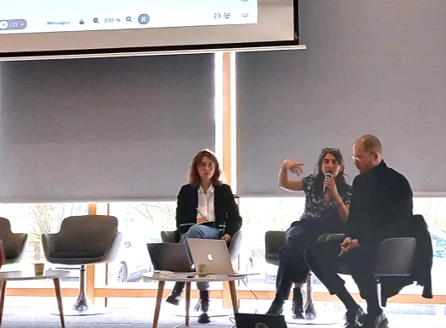
Organization of the kick-off meeting in Rouen, bringing together a diverse range of non-academic stakeholders. The day was divided into two parts : a presentation of the project, followed by a collaborative workshop focusing on the objectives and formats of future participatory workshops.
2025/03 - 2025/08
As part of the internships of Margaux ADER (M2, Cognitive Sciences) and Marthe BOISSIER (M1, Geography), a series of interviews with farmers was conducted. These interviews aimed to identify with them the relevant territories, priority themes and partners to involve. The surveys were conducted in pairs, combining the approaches of their respective disciplines.
2025/04 - in progress
Start of Elliot MEUNIER's PhD, entitled "Links to living organisms and agroecological practices among farmers : understanding and taking action." His work begins with a review of the literature on participatory workshops, which will inform the methodological design of future workshops, particularly those focusing on the relationship with living organisms.
12 and 06/13/2025
Organization of field visits to Rouen, combining a progress meeting with non-academic partners, visits to several farms and meetings with associations to expand the network of partners, fuel discussions and strengthen ties with the region.
PARTICIPANTS
LEADERS
Corinne ROBERT
ENS - PSL
Academic Leader
Corinne ROBERT is a research director at INRAE (ECOSYS Unit) and an adjunct professor at the École normale supérieure and CERES. As a specialist in the interactions between ecological dynamics, social dynamics and territories, she develops transdisciplinary approaches at the intersection of ecology, environmental sciences and social sciences. Her research focuses in particular on the agroecological transition of territories.
As the project leader, she is responsible for the scientific design, overall coordination and coherence of the research work. She ensures the integration of knowledge production, diverse deliverables, territorial partnerships and the dissemination of results, within an action-research framework.
Corinne ROBERT is a research director at INRAE (ECOSYS Unit) and an adjunct professor at the École normale supérieure and CERES. As a specialist in the interactions between ecological dynamics, social dynamics and territories, she develops transdisciplinary approaches at the intersection of ecology, environmental sciences and social sciences. Her research focuses in particular on the agroecological transition of territories.
As the project leader, she is responsible for the scientific design, overall coordination and coherence of the research work. She ensures the integration of knowledge production, diverse deliverables, territorial partnerships and the dissemination of results, within an action-research framework.
"I am very excited about developing this project with the Rouen-Normandy Conurbation, focusing on participatory approaches to support the agroecological transition of local regions. The opportunity to experiment with different workshop formats involving a diverse range of stakeholders strikes me as particularly inspiring, both in terms of supporting the dynamics of transition and fostering a vibrant, collective action-research process." Corinne ROBERT
Non-academic Project Leader
Mathias ADER is Director of Environmental Transition at Rouen-Normandy Conurbation. He is responsible for implementing metropolitan initiatives related to the preservation of natural habitats and biodiversity, as well as the transition of agricultural and food systems, particularly through the Territorial Food Project (PAT).
As a co-leader of the project, his involvement from the initial planning phase was crucial in integrating the region’s specific challenges and the metropolitan area’s priorities. He ensures that the project is closely aligned with both academic research and public action, contributing field expertise, a detailed understanding of regional dynamics and an operational vision that promotes sustainability and the adoption of results by local stakeholders.
Mathias ADER is Director of Environmental Transition at Rouen-Normandy Conurbation. He is responsible for implementing metropolitan initiatives related to the preservation of natural habitats and biodiversity, as well as the transition of agricultural and food systems, particularly through the Territorial Food Project (PAT).
As a co-leader of the project, his involvement from the initial planning phase was crucial in integrating the region’s specific challenges and the metropolitan area’s priorities. He ensures that the project is closely aligned with both academic research and public action, contributing field expertise, a detailed understanding of regional dynamics and an operational vision that promotes sustainability and the adoption of results by local stakeholders.
Mathias ADER
Rouen-Normandy Conurbation
RESEARCH TEAM
Margaux ADER is a research engineer on the project (October 2025 - March 2028). With a background in cognitive science, she helps design and implement consultation mechanisms, particularly by organizing participatory workshops and conducting interviews with stakeholders in the agricultural and local sectors.
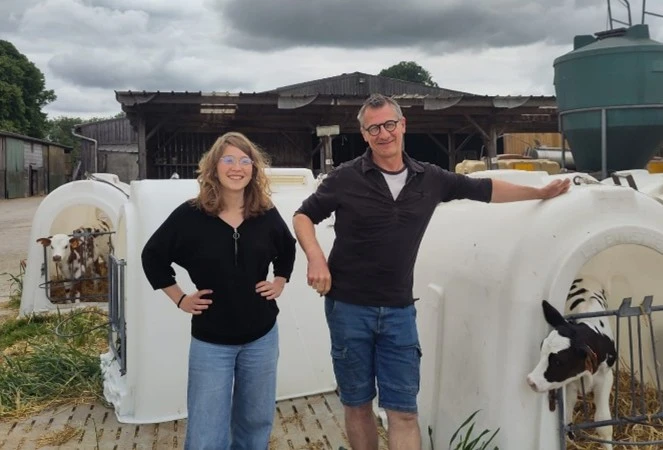
Elliot MEUNIER is a doctoral student in environmental psychology (April 2025 - April 2028). He is conducting research on farmers’ connection to living organisms and its link to agroecological practices. Supervised by Oscar NAVARRO and Corinne ROBERT, his research is also part of an action-research approach, involving the application of his work in workshops conducted with agricultural stakeholders in Normandy.
Pauline SMITH is a postdoctoral researcher in cognitive science as part of the project (April 2026 - April 2029). Her work focuses on evaluating the short- and long-term impacts of the workshops, as well as the effects of the project’s deliverables. She is developing an original methodology and contributing to discussions on the sustainability of initiatives with local stakeholders.
Pierre-Antoine PRÉCIGOUT is a researcher in agroecology and a naturalist at INRAE (ECOSYS Unit, Saclay). His work focuses on crop diversification and agricultural landscapes as tools for sustainably reducing crop diseases. He is contributing to the project on issues related to hedgerows and biodiversity, particularly as part of the "Walking and Living" workshop.
Aurélie GOUTTE is an associate professor of ecotoxicology at the École Pratique des Hautes Études (EPHE). Her research focuses on the fate and effects of pollutants in aquatic ecosystems, particularly those of agricultural and urban origin. She contributes to the project on water-related issues at the regional level.
PARTNERSHIPS
Rouen-Normandy Conurbation
Agathe COLLEONY is a research officer at the Rouen-Normandy Conurbation. With a background in conservation science, she draws on approaches from the behavioral sciences to support public policies related to biodiversity and the relationship between humans and nature. In this project, she contributes to the participatory aspects by facilitating the engagement of local stakeholders and the collaborative development of initiatives.
Fabrice BOISSIER is Deputy Director General of the Rouen-Normandy Conurbation, with particular responsibility for the ecological transition. He helped launch the project and oversees its strategic implementation as a member of the steering committee.
UniLaSalle
Karine LAVAL is the Director of Research, Development and Innovation at UniLaSalle. She contributes to the project through her commitment to fostering close collaboration between researchers and stakeholders in the agricultural sector.
Cailly-Aubette-Robec Drainage Basins Union

Pierre-Henri CLERGEOT is a project manager responsible for protecting water catchment areas. He provides expertise on water management issues and their connection to agricultural practices.
Normandy Chambers of Agriculture
Charlotte JOULIA is a crop advisor at the Seine-Maritime Chamber of Agriculture. She serves as a direct link to farmers and ensures that the region’s specific challenges are carefully addressed.
Scientific and artistic partners
Isabelle ELIZÉON is a researcher in environmental humanities and a videographer. She develops a research-creation approach that emphasizes situated knowledge and the role of the sensory in participatory processes. As part of the project, she contributes to the development of the "Walking and Living" workshop, dedicated to farmers’ connection to living things. Her work also involves the production of video deliverables used as tools for discussion and analysis. In this context, she collaborates with Joaquim AFONSO DA SILVA, a videographer.
Marguerite BABIAN is an agricultural engineer and graphic designer. She supports the project by creating visual materials, including illustrated newsletters and infographics that outline the project’s philosophy and history. Her work helps make scientific and regional issues more accessible and facilitates their dissemination.
STEERING COMMITTEE
The steering committee consists of five members, in addition to the project leaders and the project engineer. It serves as a forum for discussion and reflection, enabling the committee to monitor the project and, if necessary, adjust its direction. The committee meets twice a year and brings together a diverse and complementary group of stakeholders engaged in discussing the project’s challenges, such as representatives from watershed associations, the Chamber of Agriculture, the Rouen-Normandy Conurbation and UniLaSalle.
EDUCATION
The Master's in Sustainability Science, launched in 2024 at Université PSL, is a transdisciplinary program dedicated to supporting socio-ecological transformations. It emphasizes research conducted in close collaboration with non-academic actors and focused on practical action. Each year, Master's students contribute to transdisciplinary group projects, known as TRANSFORM projects. One of these projects is linked to the Imagine Agroecology Hotspot. This year, students focused on the representation of pesticides among various stakeholders in the agricultural sector in Normandy.