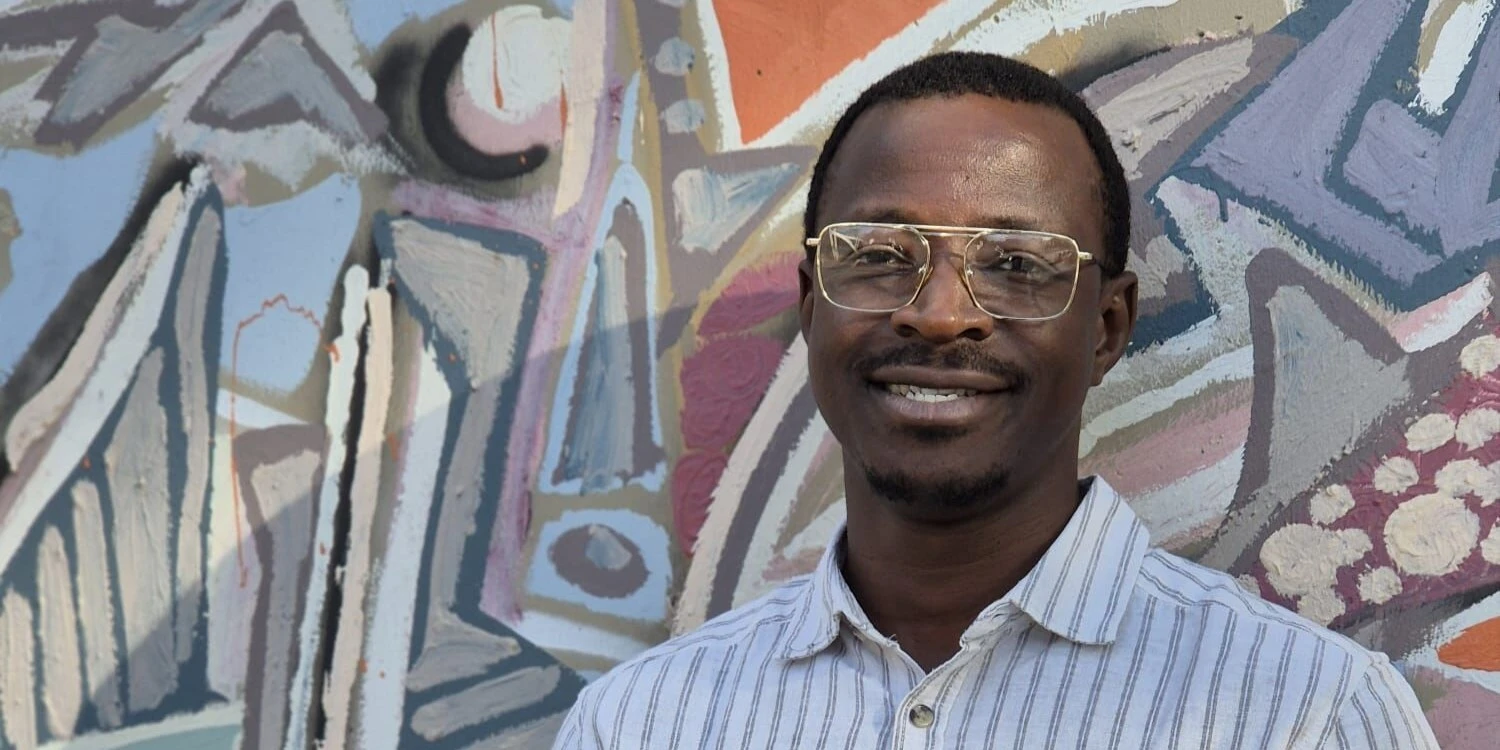
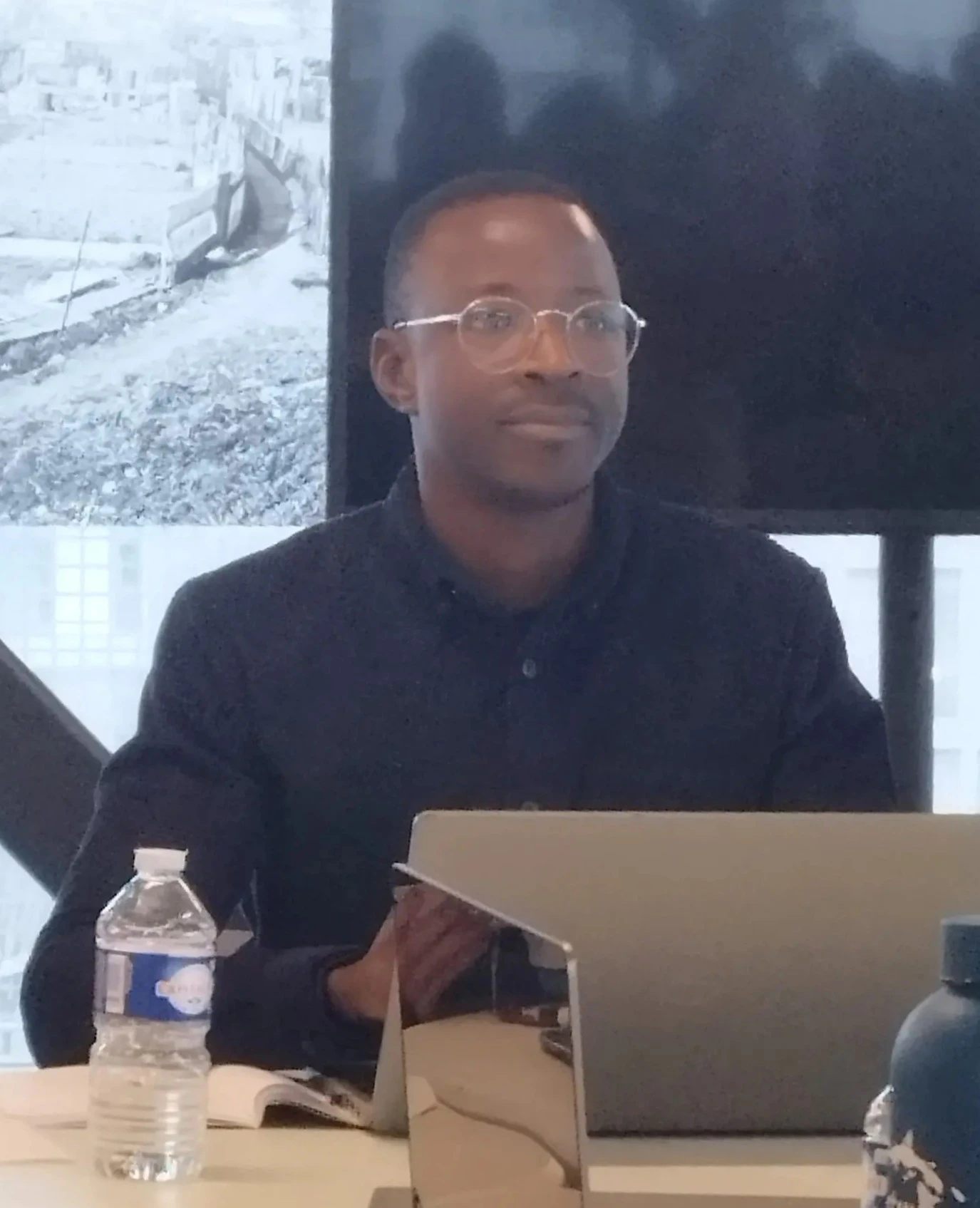
The Pilot project UNO - TRUST UNDONE DATA team welcomes a postdoctoral researcher !
Welcome to Mody Diaw !
We are delighted to welcome Mody Diaw, PhD in Sociology, to the team. Since January 2025, he has been a postdoctoral researcher at the Emile Durkheim Center at Sciences Po Bordeaux and an associate researcher at INRAE's ETTIS unit. His work lies at the intersection of the sociology of work and the sociology of the environment and focuses on inequalities in exposure to environmental and health risks in the extractive and manufacturing industries, particularly in France, Guinea, and Senegal. His thesis, defended in 2024, analyzes the work experience of bauxite workers through the lens of environmental justice. Based on a multi-site qualitative survey combining interviews, field observations, and archival analysis, it examines the social, health, and environmental effects of mining and industrial processing, as well as the ways in which workers perceive, interpret, and discuss the pollution to which they are exposed. More broadly, his research questions the production of environmental and health knowledge, its political uses, and the relationships of power, trust, and legitimacy that permeate it. Her current postdoctoral work extends these questions through the study of industrial pollution regulation, particularly in the cement sector in Senegal, by analyzing the instruments of public environmental action, the forms of negotiation between public and industrial actors, and the modalities of co-production of expertise in contexts marked by strong economic and institutional constraints.
"I joined the Trust Undone Data project because it offers an original and challenging way of thinking about health and environmental issues, taking seriously not only existing data, but also its gaps, uncertainties, and gray areas. What particularly appeals to me about this project is its ability to view data gaps not as mere technical shortcomings, but as social and political facts in their own right, revealing power relations, institutional priorities, and forms of invisibility. The link between scientific production and citizen participation also seems central to me, as it opens up spaces for discussion where experiential knowledge can engage with expert knowledge, and where the issue of trust in data is addressed collectively. Finally, the attention paid to the ways in which results are presented and debated publicly reflects my conviction that the production of knowledge about pollution and its environmental and health consequences must go hand in hand with its appropriation by the actors concerned, in particular citizens. In this respect, Trust Undone Data provides me with a particularly stimulating framework for analyzing the epistemological and democratic issues related to environmental pollution and associated health problems." Mody Diaw
Next step with the Institut écocitoyen Mont Blanc
Mody Diaw will begin work on the project in March, supporting the Institut écocitoyen Mont Blanc.
In 2025, the Institut écocitoyen Mont Blanc conducted and produced two research projects :
The first is a White Paper, the objective of which was to take stock of the scientific and institutional knowledge available on pollution in the Mont Blanc region, without any time constraints. The major trends in sources of pollution are the subject of disagreement and controversy in the valley, highlighting citizen protests linked to land use projects but also the rejection of certain practices linked to lifestyle.
At the same time, a participatory inventory of pollution sites and sources was carried out, enabling citizens to share their knowledge and awareness of certain forgotten forms of pollution that are not closely monitored by regulations.
At the end of this first stage, the Pays du Mont-Blanc Institut écocitoyen will organize two days of participatory citizen research in April and May 2026, to enable discussions and the expression of concerns about pollution by residents, associations, businesses, and local authorities. The challenge is to facilitate dialogue between researchers and members of the Institute's scientific committee and all stakeholders in the region. Knowledge related to pollution is often quickly perceived as technical, and many people do not feel qualified to speak on the subject, with the exception of a few associations and citizen groups that pursue specific, well-documented objectives. therefore, it is important to make these two days part of the popular science education movement.
Mody will work in close partnership with the Institute and individuals recruited as scientific facilitators and mediators to identify and prioritize future research questions for which a research project will then be developed with the Institute's stakeholders and the scientific committee.
In early November, Mody, along with all the researchers and organizations in the consortium, took part in the second edition of the Environmental Health Festival, held from November 7 to 9, 2025, in Carcassonne by the Institut écocitoyen en santé environnementale de l’Aude (Aude Institute for Environmental Health Eco-Citizenship). It was an opportunity to discover the local and national network of Eco-Citizen Institutes and to begin more concrete collaboration.